
Overview
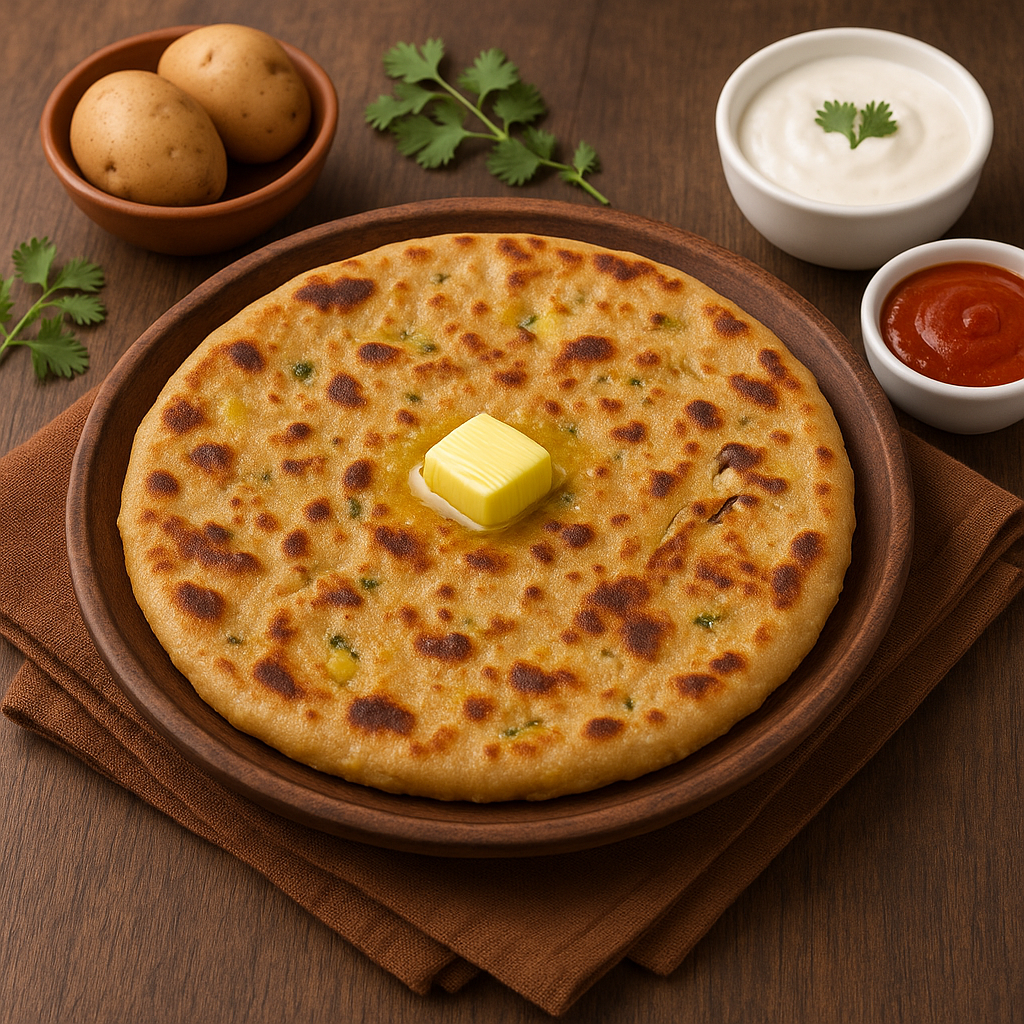
Aloo Paratha is one of the most popular and often consumed dishes in traditional Indian breakfasts. For years, this traditional North Indian dish—which is particularly well-liked in Punjab—has been a mainstay in homes. Aloo Paratha is more than simply a dish; it’s a representation of cosiness, cosiness, and nostalgia that brings back happy memories of family get-togethers, pleasant mornings, and the distinct smell of freshly made, hot parathas accompanied by generous amounts of butter.
Aloo Paratha provides the ideal harmony of flavours with its flaky, crisp exterior and soft, spicy mashed potatoes interior. This unassuming flatbread, whether eaten with yoghurt, pickles, or a glass of buttermilk, is the pinnacle of straightforward yet delectable Indian cooking. In addition to offering a detailed recipe for making Aloo Paratha at home, this post will delve further into the dish’s history, preparation, variations, and cultural importance.
1. Aloo Paratha’s History
The origins of Aloo Paratha can be found in the core of Indian cooking customs. For millennia, Indian cuisine has included parathas, a kind of unleavened flatbread. “Paratha” is derived from the Sanskrit terms “parat,” which means “layer,” and “atta,” which means “flour.” Traditionally, to make these flatbreads, you combine whole wheat flour and water, stretch the dough into thin discs, and fry it on a hot griddle with oil or ghee.
One innovative take on the traditional paratha was Aloo Paratha. The rich flavour and texture of the paratha, which sets it apart from its more straightforward siblings, come from the filling of spiced mashed potatoes (aloo). Despite being frequently linked to Punjabi food, the dish’s appeal has expanded throughout India and the world, with each region contributing its own special twist to the recipe.
2. The Conventional Components
Aloo Paratha’s simplicity is what makes it so lovely. The majority of Indian kitchens have the basic pantry items needed to prepare this dish. The customary ingredients are broken down as follows:
The main component used to make the dough is whole wheat flour. Whole wheat flour gives the paratha its distinctive chewiness and adds a hint of nutty flavour.
Mashed cooked potatoes, which make up the Aloo Paratha’s core, are used to make the filling. The perfect filling is potatoes since they are tender, have a mild flavour, and absorb the seasonings well.
Spices: A variety of ground spices, including turmeric, chilli powder, cumin, coriander, garam masala, and amchur (dried mango powder), are used to flavour the filling. The potatoes gain depth and warmth from this combination.
Herbs: To give the filling a taste and freshness boost, fresh coriander leaves, also known as cilantro, are frequently included.
Oil or Ghee: Ghee, also known as clarified butter, is frequently used to cook parathas, giving them a deep, fragrant flavour. But some people might substitute butter or vegetable oil.
Salt: Both the dough and the filling are salted to taste.
3. The Fundamental Preparation Method
Although there are a few steps involved in making Aloo Paratha, the procedure is simple and yields a dish that is well worth the effort. Here’s a quick tutorial on making Aloo Paratha at home:
To make the dough, combine whole wheat flour, water, and a small amount of salt. Work the dough until it is elastic and smooth. Let it rest for 15 to 20 minutes by covering it with a moist cloth.
Prepare the filling by mashing the potatoes after they have boiled till tender. Next, add the freshly chopped coriander and the spices (coriander, cumin, garam masala, and chilli powder). For added spiciness, you can also add a small amount of ginger or green chilli. Stir everything until thoroughly blended.
Form the parathas by dividing the dough into balls of uniform size. Place a heaping spoonful of the potato filling in the middle of each ball after rolling it out into a tiny disc. Re-form the dough into a ball by carefully folding it around the filling to seal it. Roll it out into a round paratha after gently flattening it.
To prepare the parathas, preheat a non-stick skillet or tawa (griddle) over medium heat. After laying the paratha out on the heated pan, fry it for a few minutes on one side, or until brown spots start to show. Turn the paratha over and brush the cooked side with a little oil or ghee. Turn it over one more and brush the opposite side with ghee. Keep frying until golden and crispy on both sides.
Serve Hot: Aloo Parathas go best when served hot, accompanied by a dab of butter, pickles, or plain yoghurt.
4. Aloo Paratha’s Cultural Significance
More than merely a food, aloo paratha has cultural importance, especially in Northern India. For instance, aloo paratha is a comfort food that is frequently consumed as a filling breakfast in Punjab. Families frequently congregate in the kitchen while the mother or grandmother makes freshly made parathas for everyone. The warm, golden-brown parathas and the heady scent of ghee represent tradition and love.
Aloo Paratha is frequently seen as a food that unites families in rural India, where straightforward, home-cooked meals are a necessary component of everyday life. Aloo Paratha is a symbol of comforting home cooking because it requires skill and attention to detail to prepare and is frequently enjoyed with love.
5. Aloo Paratha Varieties in India
Although the fundamental recipe for Aloo Paratha is essentially the same, various Indian locales have created distinctive versions. The diversity of India’s culinary landscape is reflected in these regional variations, which range from variances in the filling to the accompaniments.
The most popular type of aloo paratha is Punjabi aloo paratha, which is frequently served with a heaping portion of ghee or butter on top. Usually, cumin seeds, red chilli powder, and garam masala are used to spice the filling.
Bengali Aloo Paratha: In West Bengal, aloo paratha is frequently prepared with a filling that is a tad sweeter and contains spices like cinnamon and cardamom. It can also be served with a spicy chutney or a side of mustard oil.
Maharashtrian Aloo Paratha: To give it a stronger, spicier taste, this variation frequently adds green chillies and garlic to the filling. It is typically served with tamarind chutney, which is both sweet and tangy.
South Indian Aloo Paratha: Although the idea of paratha is not typical in the South, it is frequently served with coconut chutney and sambar, a hot lentil soup, in places like Tamil Nadu and Kerala.
6. How to Make Aloo Paratha Perfect
Perfecting Although creating aloo paratha is an art, there are a few tricks that can improve your paratha-making abilities:
Avoid Overstuffing: Avoid adding too much filling as this may cause the dough to rip when it is rolled out.
Rest the Dough: Allowing the dough to rest for 20 to 30 minutes facilitates rolling out and guarantees a soft, chewy finished result.
Use Ghee for Flavour: Aloo Parathas can be prepared with oil, but ghee gives them a distinct depth and richness of flavour that elevates them to a new level.
fry on Medium Heat: To guarantee that the Aloo Parathas are cooked through on the inside and crispy on the exterior, it is essential to fry them on medium heat.
Don’t Rush: Take your time when making the paratha or rolling out the dough. A paratha cooked to perfection requires patience.
7. The Nutritiousness of Aloo Paratha
Despite being a comfort food, aloo paratha is also a source of important nutrients. The high fibre content of whole wheat flour promotes better digestion and sustained energy. Aloo Paratha, which is made with potatoes and spices, has several health advantages. Potatoes are also a wonderful source of carbs and vitamins like C and B6. Healthy fats can be added with the addition of ghee or oil, but it’s crucial to balance portion sizes to prevent consuming too many calories.
8. Common Aloo Paratha Accompaniments
The rich and savoury flavour of aloo paratha is best savoured with a variety of accompaniments. Among the well-liked sides are:
Yoghurt: A refreshing, creamy accompaniment that counteracts the paratha’s heat and spice.
Pickles: Mango, lime, or mixed veggie pickles that are spicy, sour, and tasty.
Butter: A popular custom that adds added richness to a hot Aloo Paratha is a dollop of fresh butter.
Chutneys: The warmth of the paratha goes nicely with sweet and spicily flavoured chutneys like tamarind or mint.
9. Modern-Day Aloo Paratha
Aloo Paratha is still a popular dish in today’s fast-paced society. It has found a place in modern fusion cuisine, even if it is still a popular traditional breakfast option. In cafés and contemporary restaurants, Aloo Paratha wraps, paratha sandwiches, and even Aloo Paratha served with contemporary sides like avocado salsa have grown popular.
10. Final thoughts
Aloo Paratha is more than just a food; it is a long-standing cultural institution. Its warm and savoury essence, which has its roots in India’s culinary history, continues to unite people. Aloo Paratha’s versatility ensures that it will always find a place at the table, whether you like it with a side of spicy pickle or a dab of butter.
It’s simple to understand why Aloo Paratha has remained one of India’s most cherished comfort foods by looking at its history, preparation techniques, and variations. A pleasant, fulfilling experience that is closely linked to the essence of Indian cuisine is always provided by Aloo Paratha, whether you’re preparing it for your family at home or dining at a nearby restaurant.